


On-Street EV Charging Must Be Delivered and Done Right
Ireland’s long-promised solution to its EV charging bottleneck is finally on the way. For councils, charge point operators, and fleet managers, this shift is overdue. After years of urging people to “go electric,” the State is only now preparing to address one of the most persistent barriers to EV adoption: thousands of households simply cannot charge an EV outside their own front door.
Transport Minister Darragh O’Brien says on-street charging will be rolled out by the end of the year, calling it a “game changer.” He is right, but for organisations responsible for delivering infrastructure, it is clear this game has been stuck on pause for far too long.
Why On-Street Charging Matters for B2B Stakeholders
For years, local authorities have had no choice but to prohibit residents from running charging cables across footpaths, citing legitimate safety concerns. The intention was correct, as nobody wants trip hazards, but the absence of an approved alternative created a structural barrier to EV adoption in urban areas.
Most city residents do not have driveways. Even Minister O’Brien acknowledges he sees the issue in his own multi-unit development. Public charging has expanded, but it remains patchy, crowded, and fundamentally unsuitable as a long-term replacement for home charging.
For fleet operators, this has meant operational constraints that slow electrification and increase costs, impacting fleet efficiency.
If Ireland is serious about EV adoption, enabling people to charge where they live is non-negotiable. That requires coordinated action across the B2B ecosystem.
What On-Street Charging Actually Looks Like, Operationally
Ireland does not need to invent new solutions. It needs to deploy the ones already working across Europe:
-
-
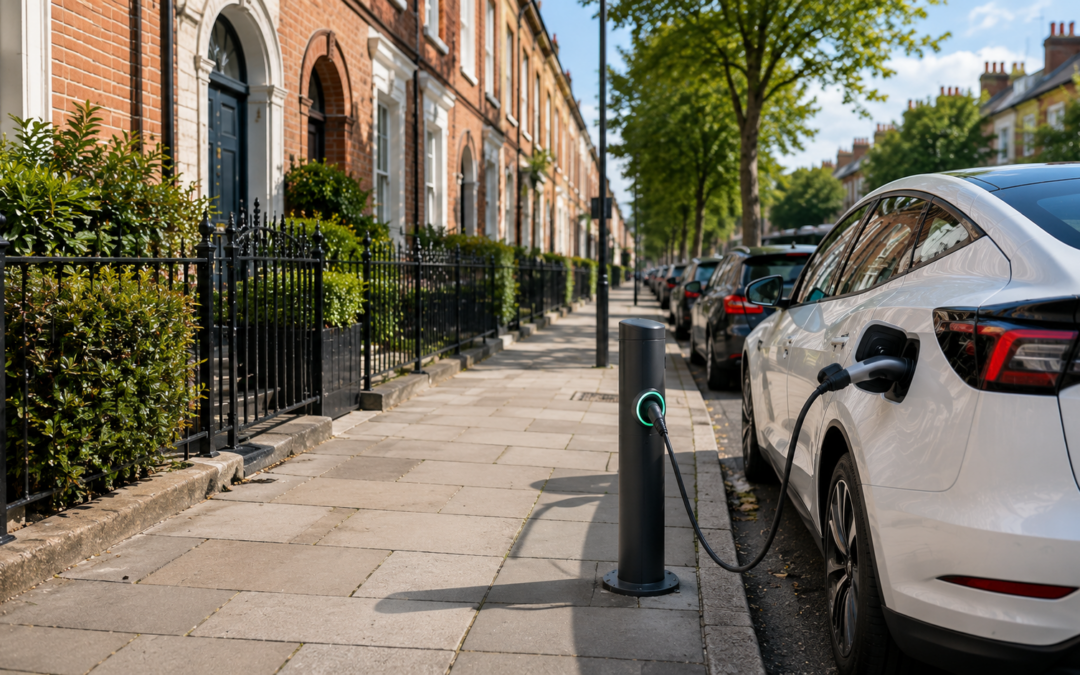
- Bollard chargers: Slim, unobtrusive pavement-mounted AC chargers offering reliable overnight utilisation and predictable ROI for operators.
- Lamppost chargers: Retrofits that leverage existing streetlight infrastructure, reducing installation complexity and cost for councils.
- Cable gullies: Recessed channels enabling safe cross-pavement charging for residents without driveways, without compromising pedestrian safety.
-
These solutions are proven, scalable, and designed for exactly the kind of streets Irish councils manage every day.
For B2B stakeholders, they represent:
-
-
- Lower deployment costs
- Faster approvals
- Higher utilisation rates
- Reduced public realm impacts
- Scalable models for multi-street or multi-borough rollouts
-
The Legislation That Could Finally Unlock Deployment
The Private Wires Bill, now moving through the Oireachtas, may finally provide the legal clarity councils need. This bill will allow households without driveways to safely run private charging cables across pavements, resolving a major legal barrier.
The Minister says new guidelines will be issued to local authorities “in the next few months.” If delivered, they will make a real difference. However, they also highlight how slowly Ireland moves on climate-critical infrastructure, and why councils and operators must be ready to act the moment clarity arrives.
What “Fast and Ambitious” Should Actually Mean for Councils, CPOs, and Fleets
Ireland cannot afford another slow, cautious rollout. Real ambition looks like:
-
-
- 5,000 on-street chargers deployed by 2030, prioritising high-density neighbourhoods
- A national kerbside charging framework that standardises planning, approvals, and procurement
- Dedicated funding for councils to run pilot projects and scale successful models
- Mixed-model deployments combining bollards, lampposts, and cable gullies to match local street conditions
- Data-driven site selection to maximise utilisation and commercial viability
-
Minister O’Brien is right that EVs can save drivers around €1,500 a year, but savings only matter if people can charge the vehicles they lease or buy.
Our Point of View
On-street charging must be designed around real streets, real communities, and real operational constraints. That means infrastructure that is:
-
-
- Safe
- Unobtrusive
- Cost-efficient
- Compliant with emerging legislation
- Easy for councils and operators to deploy at scale
-
We are working with our trade organisation and strategic partners to identify the right mix of solutions and accelerate practical, street-ready deployments across Ireland.
If you run a fleet with EVs, or plan to, we can help you move from concept to implementation with kerbside charging strategies that support operational reliability and long-term cost efficiency.
Book a consultation with Mahony Fleet
Ireland’s EV future depends on getting on-street charging right. Now is the moment for councils, operators, and fleets to lead quickly, confidently, and at scale.
